Between Sessions
Therapy doesn’t just happen in session. Here we share thoughts, reflections, and practical guidance to support you as you navigate emotions, relationships, and life’s more challenging moments.

Rest and Relaxation: Just What the Doctor Ordered
After a long day of work, most people would love to come home and rest or relax. However, life and responsibilities do not simply disappear. Dinner still needs to be made, the laundry does not wash itself, the dog cannot take itself on a walk, the grass will continue to grow, children require attention and social connection, and the list goes on. This has even led to a new trend of people sharing their “5-to-9” schedules after working a traditional 9-to-5 job. These schedules often highlight the responsibilities and tasks that fill the hours after work, leaving little time for yourself.
Are You Speaking Diet Culture??
These beliefs don't just influence what we eat or how we feel about our bodies. They also influence how we speak.
Diet culture beliefs become embedded in our everyday language and get reinforced through seemingly harmless comments. We often say them without malicious intent—and without realizing what we're actually communicating.

When You Can’t Unfollow
For individuals recovering from an eating disorder, watching a friend, family member, or partner pursue weight loss or embrace diet culture can evoke a wide range of emotions. You may experience sadness, fear, jealousy, anger, grief, or self-doubt as old thoughts about body size, food, and self-worth begin to resurface.

Off Campus, Summer House, and the Desire for Connection
Somewhere along the way, many of us stopped treating connection as a need and started treating it as a want. Something we have to earn.

Stuck In a Binge/Restrict Cycle? You’re Not Alone
If you feel stuck in a cycle of binge eating, shame, and starting over—you’re not alone.
Many people who seek support for binge eating describe a similar experience: feeling frustrated, confused, and wondering, “Why can’t I just eat normally?” It can seem like everyone else has it figured out—but that’s not the full picture.
We’re grateful for opportunities to contribute to conversations about mental health, relationships, and emotional well-being in our broader community.
Conversation in the Community

Scientists Uncover a Major Biological Clue Behind Anorexia Relapse
The findings aren’t entirely new, but they “build on existing research in a meaningful way,” says Erin Birely, LCPC, a counselor who specializes in disordered eating and alumni services coordinator at The Renfrew Center.
Safety First: Tackling Tough Topics with Teens: Understanding Eating Disorders Among Youth
In this episode, Amanda talks with Erin Birely, LCPC, about disordered eating among adolescents. They discuss the various types of eating disorders, the role of emotional avoidance, and biopsychosocial risk factors.

BloomTV: A fine line between getting healthy and disordered eating
Amber Freeman, host of Bloom, chatted with Erin Birely, LCPC to discuss the impact of social media on body image and practical ways to build a healthier relationship with food.
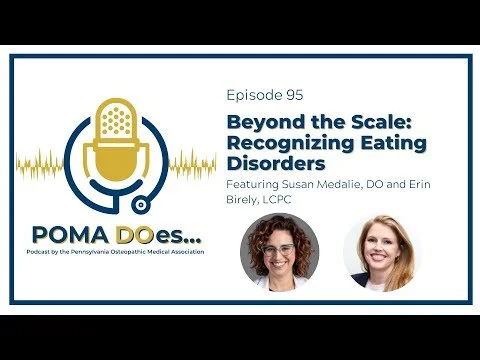
POMA DOes Podcast Beyond the Scale: Recognizing Eating Disorders
In this episode of POMA DOes…, Susan Medalie, DO, speaks with Erin Birely, LCPC, about recognizing and addressing eating disorders. They discuss why eating disorders can’t be identified by appearance alone, the behaviors and misconceptions that are sometimes overlooked, and the importance of approaching these conversations with compassion and curiosity.